Key Takeaways
- Siemens and NVIDIA built their first AI‑driven manufacturing apps in under 10 months by merging NVIDIA’s accelerated‑compute stack with Siemens’ industrial software.
- Virtual production preparation for PCB assemblies cuts engineering effort by ≈85 % and shortens time‑to‑market by ≈40 % versus traditional prototype‑based workflows.
- AI‑enhanced production planning now evaluates capacity, material supply, delivery windows, and line constraints in real time, improving schedule reliability.
- The Erlangen Electronics Factory serves as a live‑testbed; lessons learned will be rolled out to other Siemens sites worldwide.
Siemens‑NVIDIA AI Initiative at Erlangen
Background and Timeline
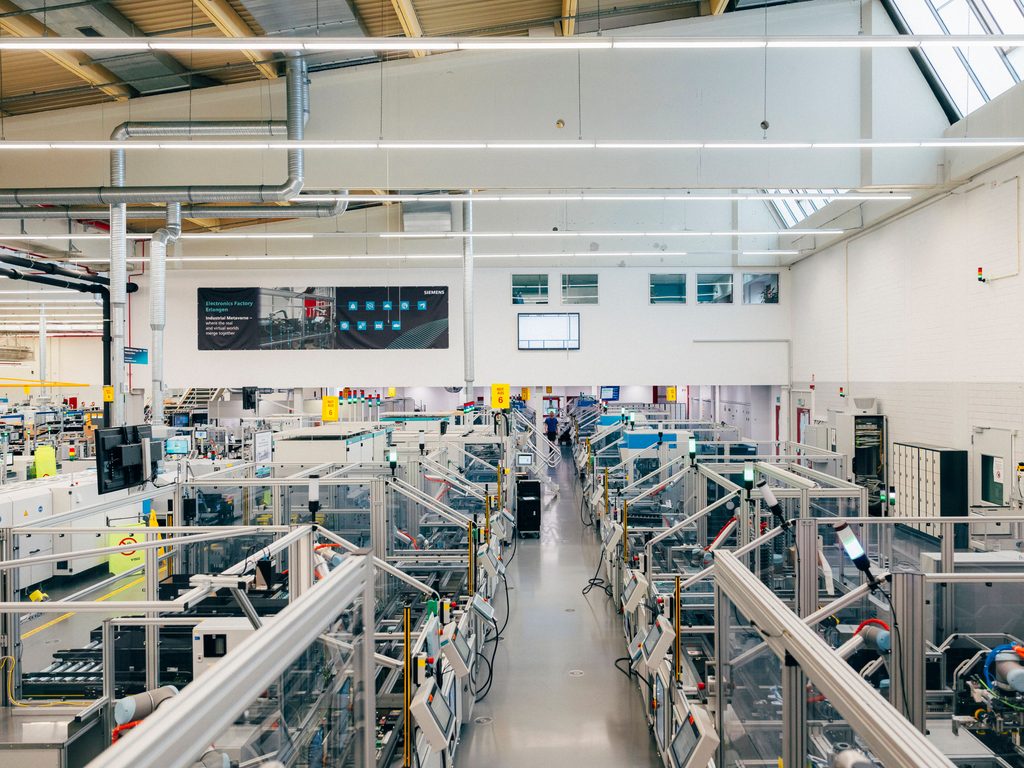
At CES 2026 in Las Vegas, Siemens announced a joint venture with NVIDIA to create AI‑enabled manufacturing hubs. Within nine months, the partnership delivered its first suite of applications at Siemens’ Electronics Factory in Erlangen, Germany. The plant now functions as a pilot environment for evaluating how AI and digital twins can be scaled across Siemens’ global production network.
How the Technology Works
| Aspect | Traditional Approach | AI‑Driven Workflow (Erlangen) |
|---|---|---|
| Design validation | Physical prototypes required; weeks of manual setup for vision‑system training. | Photorealistic digital twins generated by NVIDIA AI; inspection parameters set virtually. |
| Engineering effort | 100 % manual CAD/inspection preparation. | ≈15 % of original effort (≈85 % reduction). |
| Time‑to‑market | 8–12 weeks for prototype‑based validation. | ≈5–7 weeks (≈40 % faster). |
| Production planning | Static scheduling based on historical data; limited responsiveness to material shortages. | Dynamic, constraint‑aware AI optimizer that ingests real‑time capacity, inventory, and due‑date data. |
| Development lead‑time | Multi‑year R&D cycles for new software tools. | <10 months from concept to live test. |
Virtual Production Preparation for PCB Assemblies
The Erlangen site manufactures printed‑circuit‑board (PCB) modules used in drives and frequency converters. By feeding a digital twin of each PCB into NVIDIA’s generative‑AI engine, engineers can instantly create high‑fidelity renderings that mimic real‑world lighting and surface textures. These renderings train vision‑inspection algorithms before any physical board exists, eliminating the weeks‑long “prototype‑first” bottleneck.
- Engineering effort saved: Up to 85 % (e.g., a 120‑hour task reduced to ~18 hours).
- Lead‑time reduction: Up to 40 % (e.g., a 10‑week schedule compressed to ~6 weeks).
AI‑Powered Production Planning
The AI scheduler integrates:
- Line capacity models (machine throughput, shift patterns).
- Material availability (real‑time inventory from ERP).
- Delivery commitments (customer due dates).
- Operational constraints (maintenance windows, change‑over times).
Using NVIDIA’s TensorRT‑accelerated inference, the planner evaluates millions of schedule permutations in seconds, delivering a recommended production mix that maximizes on‑time delivery while respecting resource limits.
Roadmap and Future Deployments
- Next 6 months: Extend AI tools to product‑design optimization (e.g., topology‑aware component placement).
- 12‑month horizon: Deploy the same AI stack at Siemens facilities in Bremen (Germany) and Charlotte (USA), targeting a 15 % overall OEE (Overall Equipment Effectiveness) lift.
- Beyond 2027: Explore closed‑loop feedback where AI‑driven inspection results automatically trigger design‑for‑manufacturability adjustments in the digital twin.
Bottom Line
Siemens and NVIDIA have demonstrated that coupling AI‑generated digital twins with accelerated computing can dramatically streamline both engineering and scheduling tasks on a live factory floor. The Erlangen pilot proves that virtual production preparation can slash effort by 85 % and accelerate market entry by 40 %, while AI‑enabled planning delivers real‑time, constraint‑aware schedules. As the duo scales these tools to additional sites, the manufacturing sector can expect faster product rollouts, higher equipment utilization, and a measurable boost to competitive agility.


