Key Takeaways
- Material‑focused printers dominate the show; vendors highlight end‑product performance rather than generic machine specs.
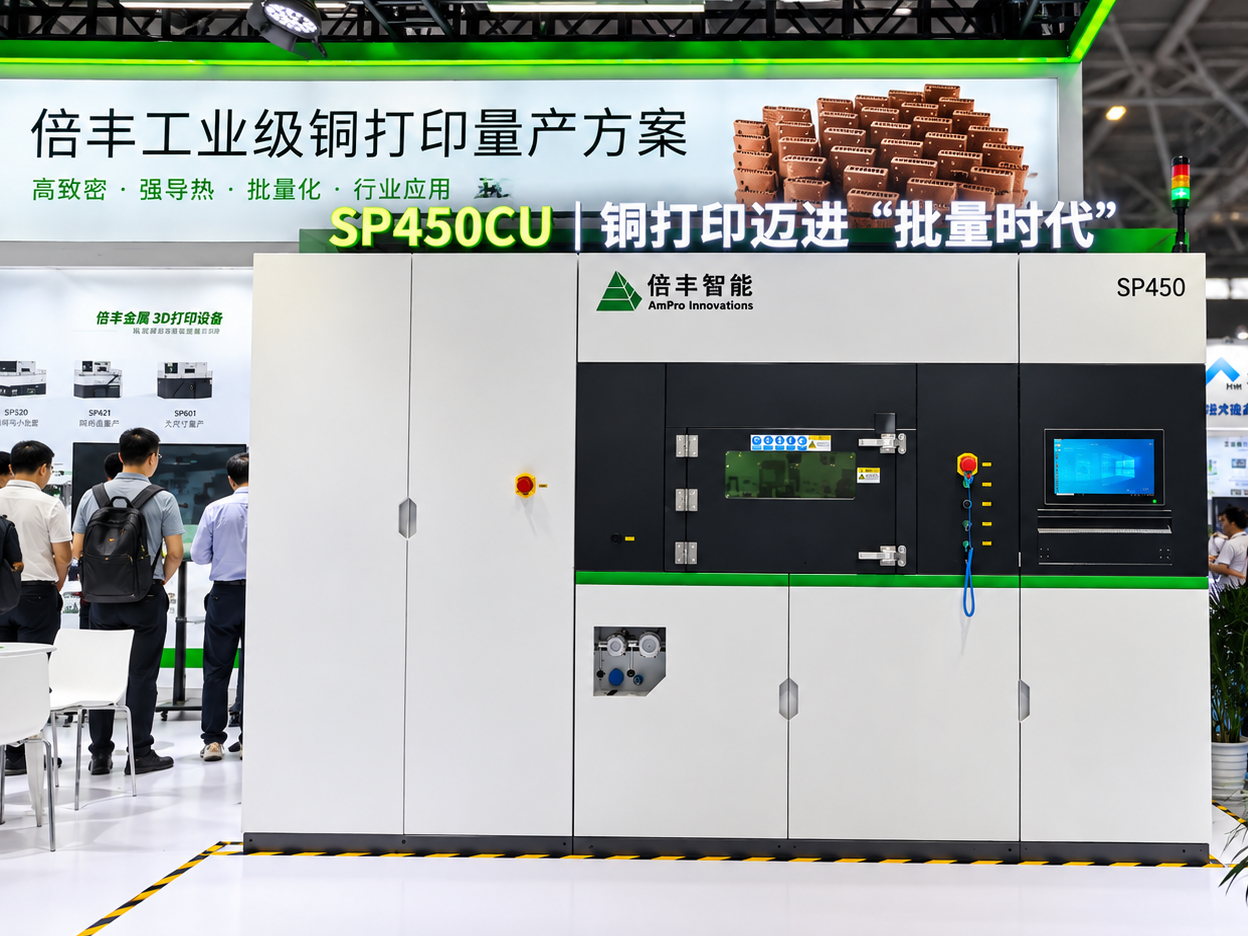
- Copper & copper‑alloy AM is scaling up (large‑format SP450CU) while also shrinking down (desktop SnowPod) to serve divergent markets.
- Robotics, flexible footwear, precision ceramics and AI‑driven design are the four hottest application domains.
- Batch‑production economics and post‑process reliability are becoming decisive buying criteria.
- AI‑generated geometry is moving from concept to production, cutting design‑to‑part time by up to 40 %.
Introduction
The third edition of TCT Shenzhen 2026 ran from 14‑16 October in Hall 15 of the Shenzhen World Exhibition & Convention Center. Over 300 exhibitors showcased the latest in China’s additive‑manufacturing ecosystem, ranging from powder‑bed metal printers to AI‑assisted design platforms. The event’s narrative was clear: manufacturers are shifting from “what the printer can do” to “what the printer can make.” Below are the seven trends that defined the floor.
1. Copper Printing Expands in Size and Scale
Large‑Format Production – AmPro SP450CU
AmPro’s SP450CU system is a purpose‑built copper printer that bundles a 450 mm × 450 mm × 450 mm build envelope with a 400 W 1064 nm fiber laser. The machine processes gas‑atomized Cu‑Cr‑Zr powder (particle size 15‑45 µm) at a flow rate of 12 g/min, delivering a typical layer thickness of 30 µm. Key performance figures disclosed at the booth:
| Parameter | Value |
|---|---|
| Build volume | 450 × 450 × 450 mm |
| Laser power | 400 W |
| Powder feed rate | 12 g /min |
| Layer thickness | 30 µm (typical) |
| Part density | ≥ 99.5 % (as‑built) |
| Reported price | US $650 k (incl. powder) |
The system targets high‑heat‑flux components such as data‑center cold plates, heat exchangers, and complex fluidic manifolds where thermal conductivity (≈ 400 W·m⁻¹·K⁻¹ for pure copper) is critical.
Desktop Metal Access – SnowX SnowPod
SnowX unveiled a prototype desktop metal printer, the SnowPod, aimed at small‑shop environments. The machine boasts a 120 mm × 120 mm × 120 mm build volume, a 200 W diode laser, and a proprietary “Cold‑Sinter” powder‑bed process that claims to achieve 85 % density in a single pass. The company announced an upcoming crowdfunding campaign with an estimated retail price of US $12 k.
| Parameter | SnowPod (prototype) |
|---|---|
| Build volume | 120 × 120 × 120 mm |
| Laser power | 200 W |
| Process | Cold‑Sinter (powder‑bed) |
| Claimed density | 85 % (as‑built) |
| Target price | US $12 k (crowdfunded) |
While the SnowPod’s performance remains to be validated, its appearance signals a push to democratize metal AM beyond industrial labs.
2. Robot‑Structure Components Gain Traction
Several robotics OEMs displayed custom‑printed joint housings, gear carriers and lightweight lattice frames. The emphasis was on topology‑optimized titanium (Ti‑6Al‑4V) printed on L‑Laser’s 500 W DMLS platform, achieving wall thicknesses down to 0.3 mm without compromising load‑bearing capacity.
3. Flexible Footwear and Wearables
A partnership between a sneaker brand and Carbon3D demonstrated multi‑material midsoles printed with a blend of TPU ( Shore A 85) and a proprietary elastic resin. The parts exhibited a 25 % reduction in weight versus traditional EVA foams while retaining a 1.2 × elongation at break.
4. Precision Ceramics for Medical & Optics
CeramTec showcased a laser‑sintered alumina (Al₂O₃) platform capable of 10 µm layer resolution and achieving 99.8 % theoretical density after a 2‑hour sintering cycle at 1550 °C. The system is positioned for high‑precision lenses and dental implants.
5. AI‑Generated 3D Models Accelerate Design
A demo from DeepForm AI illustrated how generative design algorithms produced lattice structures for heat exchangers in under 30 seconds. The resulting STL files were directly sliced on‑site and printed on a Formlabs Fuse 1, cutting the design‑to‑print cycle by roughly 40 %.
6. End‑to‑End Material Supply Chains
Vendors such as Höganäs and GKN Powder highlighted integrated powder‑recycling loops, promising up to 95 % material reuse for copper and nickel alloys. On‑site powder analysers (laser diffraction, XRF) were demonstrated to maintain particle‑size consistency within ± 2 µm.
7. Production‑Scale Economics Matter More Than Specs
Buyers at TCT Shenzhen repeatedly asked for cost‑per‑part data. AmPro quoted a **US $0.


