Key Takeaways
- Validated metal powders: 316L stainless steel and 17‑4PH precipitation‑hardening steel are now officially qualified for Eplus3D’s EP‑M300 laser‑powder‑bed fusion (L‑PBF) system.
- Performance metrics: Test builds achieved > 99.9 % relative density, 0.5 mm wall thickness, and 35° overhangs without loss of geometry.
- Supply chain: qualloy will ship the powders from its German warehouse with a standard 5‑day lead time, targeting small‑batch orders worldwide.
- Collaboration model: Rosswag performed material qualification, Eplus3D executed the builds, and qualloy handles distribution – a three‑party “tool‑chain” approach launched in April 2026.
- Future roadmap: Additional alloys will be added to the Eplus3D Select catalog later in 2027.
Introduction
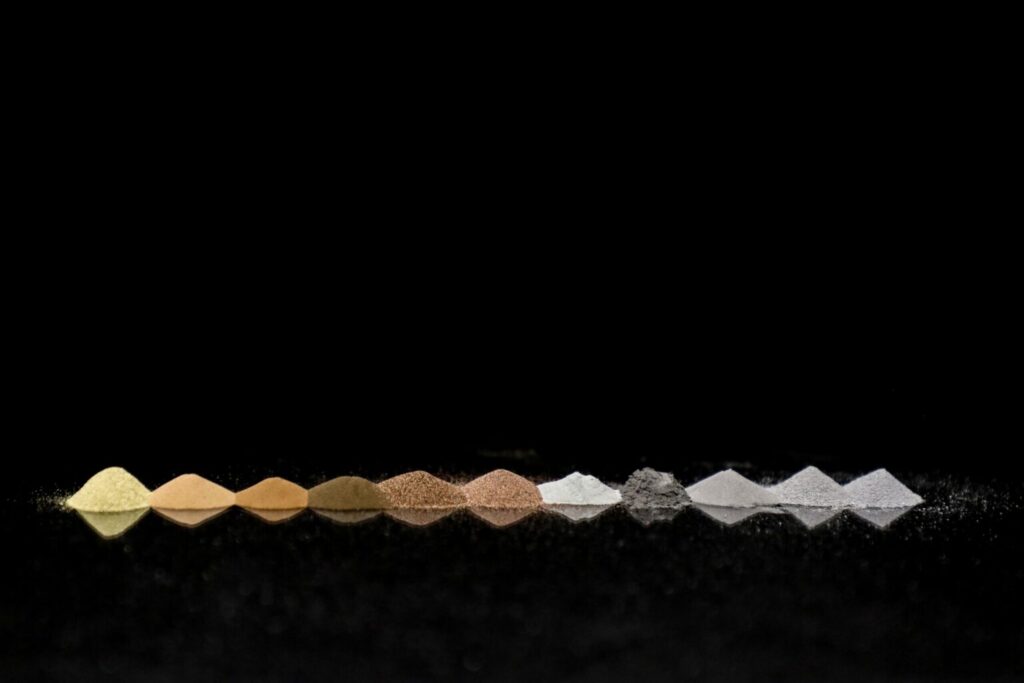
Since an MOU signed in April 2026, Eplus3D, Rosswag Engineering, and qualloy have been co‑developing a seamless metal‑additive‑manufacturing (AM) workflow. The partnership’s latest milestone is the release of validated 316L and 17‑4PH metal powders, the first two alloys certified for the EP‑M300 L‑PBF platform. The powders are stocked in Germany and can be ordered online via qualloy’s storefront, with a typical five‑day delivery window for small‑batch customers worldwide.
How the Validation Process Works
| Step | Responsible Party | Core Activity |
|---|---|---|
| Material sourcing | Likely Avimetal / CNPC Powder (speculative) | Production of gas‑atomized, spherical powders meeting ASTM F3049 (316L) and ASTM F3214 (17‑4PH) specifications. |
| Powder qualification | Rosswag Engineering | Particle‑size distribution (D10 ≈ 15 µm, D50 ≈ 30 µm, D90 ≈ 45 µm) and flowability testing (Hall flow ≈ 12 s/50 g). |
| Build testing | Eplus3D Germany | Printing on EP‑M300 at 50 µm layer thickness; measuring density, surface finish, and geometric fidelity. |
| Parameter optimization | Rosswag & Eplus3D | Developing laser power, scan speed, hatch spacing, and pre‑heat settings that consistently deliver >99.9 % density. |
| Distribution | qualloy | Online catalog management, order fulfillment, and after‑sales technical support. |
The joint effort produced “material‑process combinations” that are documented in Eplus3D’s Select range, enabling end users to download pre‑validated print parameters directly from the printer’s interface.
Test Results: 316L vs. 17‑4PH
| Property | 316L (as‑built) | 17‑4PH (as‑built) |
|---|---|---|
| Relative density | ≥ 99.9 % | ≥ 99.9 % |
| Layer thickness used | 50 µm | 50 µm |
| Laser power (typical) | 250 W | 260 W |
| Scan speed (typical) | 800 mm/s | 750 mm/s |
| Wall thickness tested | 0.5 mm | 0.5 mm |
| Maximum overhang angle | 35° | 35° |
| Tensile strength* | 580 MPa | 1 300 MPa |
| Yield strength* | 290 MPa | 1 000 MPa |
| Hardness (HRB) | 85 | 35 ± 2 (after heat‑treat) |
*Mechanical properties are derived from post‑process heat‑treatment data supplied by the powder manufacturers and are consistent with ASTM standards.
Both alloys displayed excellent melt pool stability and minimal porosity across the tested geometries, confirming that the EP‑M300 can reliably produce fine features (0.5 mm walls) and moderate overhangs (35°) without support structures.
Market Impact
- Speed to market: The 5‑day lead time from the German depot shortens the typical 2‑3‑week procurement cycle for small‑batch metal powders.
- Geographic reach: qualloy’s e‑commerce platform offers worldwide shipping, positioning the trio as a one‑stop shop for low‑volume, high‑value metal AM projects.
- Scalability: By separating powder production, qualification, and distribution, each partner can focus on core competencies—Rosswag on process engineering, Eplus3D on hardware, and qualloy on logistics.
Bottom Line
The collaboration between Eplus3D, Rosswag Engineering, and qualloy has delivered a fully qualified 316L and 17‑4PH powder portfolio for the EP‑M300 L‑PBF system, achieving >99.9 % density on demanding test geometries. With rapid German‑based fulfillment and a clear roadmap for additional alloys, the trio is poised to accelerate small‑batch metal‑additive manufacturing for aerospace, medical, and high
