Key Takeaways
- Microchip’s RT PolarFire FPGA (RTPF500ZT) earned DLA QML‑V – the highest space‑microelectronics qualification.
- The RT PolarFire SoC (RTPFS460ZT) achieved QML‑Q and MIL‑STD‑883 Class B qualifications.
- Both devices use a radiation‑tolerant configuration architecture that eliminates SEU‑related scrubbing and reduces power/thermal load.
- RTPFS460ZT adds a 64‑bit RISC‑V MSS, enabling on‑chip processing for autonomous space payloads.
- Development kits and a unified tool flow shorten time‑to‑flight for satellite, constellation, and deep‑space missions.
Microchip Expands Space‑Qualified Portfolio
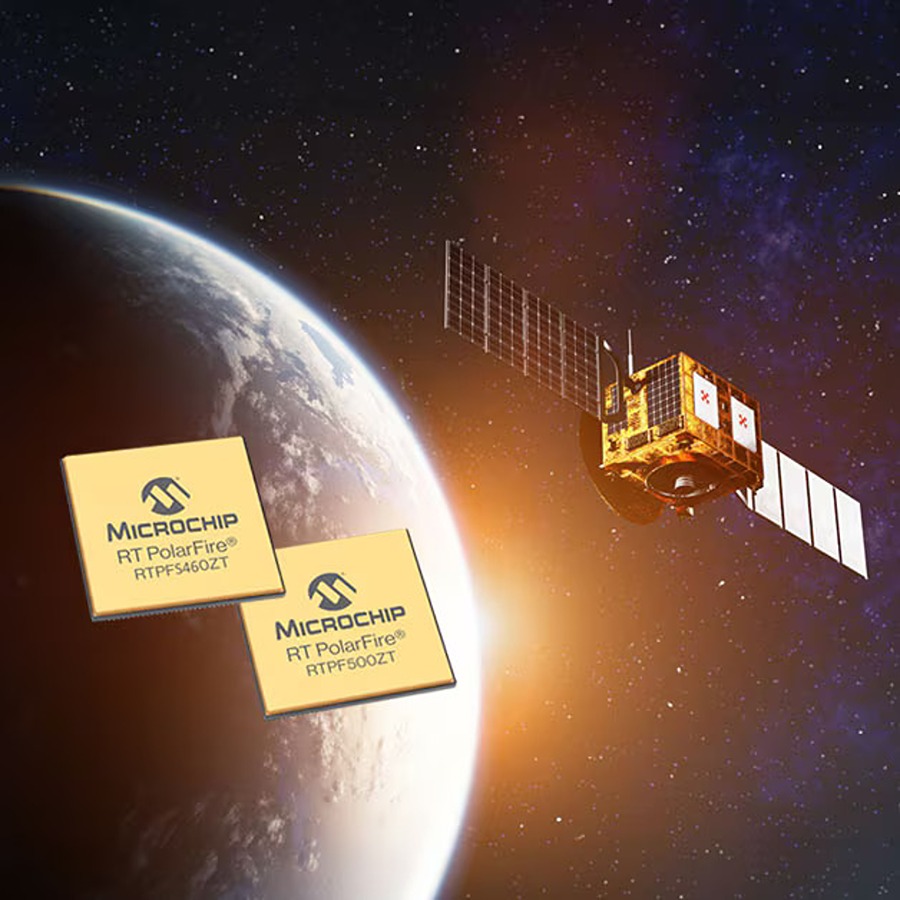
Microchip Technology announced that its radiation‑tolerant (RT) PolarFire family now includes two devices with formal spaceflight credentials. The RTPF500ZT FPGA has been placed on the Defense Logistics Agency (DLA) Qualified Manufacturers List (QML) Class V list, the most stringent certification for space‑borne microelectronics. Meanwhile, the RTPFS460ZT SoC earned QML Class Q and MIL‑STD‑883 Class B qualifications, confirming its suitability for both military and aerospace programs.
These qualifications certify that the parts meet rigorous radiation‑hardening, mechanical, and reliability standards, allowing system architects to procure flight‑ready components without additional derating or custom testing.
Why RT PolarFire Stands Out
SEU‑Free Configuration
Typical SRAM‑based FPGAs rely on periodic configuration scrubbing to correct single‑event upsets (SEUs). Scrubbing intervals can leave latent errors and increase standby power. RT PolarFire devices employ a radiation‑tolerant configuration memory that prevents SEU‑induced configuration corruption outright, removing the need for external scrubbing logic and lowering overall power draw.
Power‑Efficient Operation
- Core voltage: 0.9 V (typical)
- Dynamic power: ~150 mW per 100 k logic elements (LEs) at 100 MHz
- Thermal design power (TDP): < 2 W for a fully populated device
These figures keep the devices well within the thermal envelopes of small‑sat platforms and enable longer mission lifetimes.
Built‑In Security
The RT PolarFire line integrates defense‑grade encryption and authentication blocks, safeguarding firmware and configuration bitstreams against tampering—a critical requirement for mission‑critical payloads.
Device‑by‑Device Comparison
| Feature | RTPF500ZT (FPGA‑only) | RTPFS460ZT (SoC) |
|---|---|---|
| Qualification | DLA QML‑V (Class V) | DLA QML‑Q + MIL‑STD‑883 Class B |
| Logic Capacity | Up to 544 k LEs | Up to 460 k LEs |
| Embedded Memory | 7.5 Mb SRAM + 2.5 Mb Flash | 2.5 Mb SRAM + 1.5 Mb Flash |
| Processor Subsystem | – | Dual 64‑bit RISC‑V cores (up to 400 MHz) |
| Radiation Performance | SEL‑tolerant, SEU‑free config | SEL‑tolerant, SEU‑free config |
| Power (typ.) | 1.8 W @ 200 MHz | 2.2 W @ 300 MHz (including MSS) |
| Package | 676‑pin BGA, 25 mm × 25 mm | 676‑pin BGA, 25 mm × 25 mm |
| Development Kit | RT PolarFire FPGA Kit (incl. JTAG, power) | RT PolarFire SoC Kit (adds debug for RISC‑V) |
All values are based on Microchip datasheets (2026 revision).
Real‑World Applications
- Satellite payloads & constellations: The SEU‑free architecture reduces on‑board error‑correction overhead, freeing resources for payload processing.
- Human‑rated spacecraft: QML‑V certification meets NASA’s stringent reliability thresholds for crewed missions.
- Deep‑space probes: Low power and thermal margins extend operational life where solar power is scarce.
The integrated RISC‑V MSS in the SoC variant enables autonomous decision‑making (e.g., on‑board data compression, attitude control) without external processors, simplifying board layout and improving fault isolation.
Development Ecosystem
Microchip supplies RT PolarFire development kits that share a common hardware form factor and use the Libero SoC Design Suite. The unified tool flow supports:
- RTL synthesis for both FPGA‑only and SoC designs
- Automated timing closure with radiation‑aware constraints
- Secure bitstream generation (AES‑256)
This ecosystem shortens the typical 12‑ to 18‑month flight‑hardware development cycle to 8‑10 months for many satellite programs.
Bottom Line
Microchip’s latest qualifications place the RT PolarFire FPGA (RTPF500ZT) and RT PolarFire SoC (RTPFS460ZT) among the most rigorously vetted components for space and defense markets. Their SEU‑free configuration, low‑power operation, and built‑in security address the core challenges of modern aerospace systems, while the unified development environment accelerates time‑to‑flight. Engineers seeking a high‑reliability, radiation‑tolerant programmable solution now have two distinct, flight‑qualified options from a single architecture—making Microchip a compelling partner for next‑generation satellite and deep‑space missions.