Key Takeaways
- Digital scanning + HP Multi Jet Fusion (MJF) can shrink the orthotics/prosthetics lead‑time from weeks to 48‑72 hrs.
- A single patient visit is often enough when a connected workflow is used, versus 3‑5 visits in the classic mold‑based method.
- HP’s MJF (e.g., Jet Fusion 4200) delivers 0.08 mm layer resolution and a 380 × 284 × 380 mm build envelope, enabling full‑size sockets in one print.
- DyeMansion’s laser‑based post‑processing (LUX cleaning, LIX coloring) removes >99 % of powder and adds durable color in <2 min per part.
- The combined workflow improves traceability (digital file‑to‑part audit trail) and consistency across batches.
Overview: From Casts to Connected 3‑D Printing
Creating a custom orthotic or prosthetic has historically required multiple physical molds, hand‑carved adjustments, and repeated clinic visits. The new paradigm replaces these steps with a seamless digital chain: optical scanning, CAD design, additive manufacturing, and automated post‑processing. The result is a patient‑specific device that meets comfort, durability, and regulatory standards while slashing production time.
Webinar Spotlight – “Enabling 3D‑Printed Orthotics & Prosthetics”
On 10 Nov 2024, HP Additive Manufacturing Solutions partnered with DyeMansion for a live Zoom session. The webinar walked attendees through the entire digital workflow, emphasizing productivity gains, repeatability, and full traceability for healthcare providers and OEMs.
- Date & Time: 10 Nov 2024, 10:00 a.m. PT
- Registration: Zoom link
- Target Audience: Orthotics/prosthetics manufacturers, clinic engineers, and R&D teams exploring additive solutions.
Speakers
| Speaker | Role | Expertise |
|---|---|---|
| David Johnson | Application Engineer, HP | Leads U.S. healthcare support for HP’s Multi Jet Fusion (MJF) platform; 10 yr experience across polymers, metals, and composites. |
| Emilie Simpson | Senior Application Engineer, DyeMansion | Specialist in laser‑based cleaning, finishing, and coloration; background in biomedical mechanical engineering and patient‑specific prosthetic sockets. |
Digital Workflow vs. Traditional Process
| Phase | Traditional Cast‑Based Method | Digital MJF‑Based Method |
|---|---|---|
| Patient Interaction | 3‑5 clinic visits for molding, trial, and adjustment | 1‑2 visits: scan (≤5 min) and fit‑check |
| Design Lead‑time | 1–2 weeks for hand‑carving and trial | 4–6 hrs for CAD generation (auto‑fit algorithms) |
| Manufacturing Time | 2–3 days for socket casting, plus curing | 12–24 hrs print (HP Jet Fusion 4200, 25 cm³/hr) |
| Post‑Processing | Manual sanding, hand‑painting (variable quality) | Laser cleaning (LUX, 30 W, 1500 mm²/min) + laser coloring (LIX, 30 W, <2 min/part) |
| Accuracy | ±1.0 mm (human error) | ±0.5 mm (MJF resolution 0.08 mm) |
| Traceability | Paper records, limited batch control | Full digital audit trail (scan → STL → print log) |
| Total Turn‑around | 2–3 weeks | 48–72 hrs |
HP Multi Jet Fusion – Technology Highlights
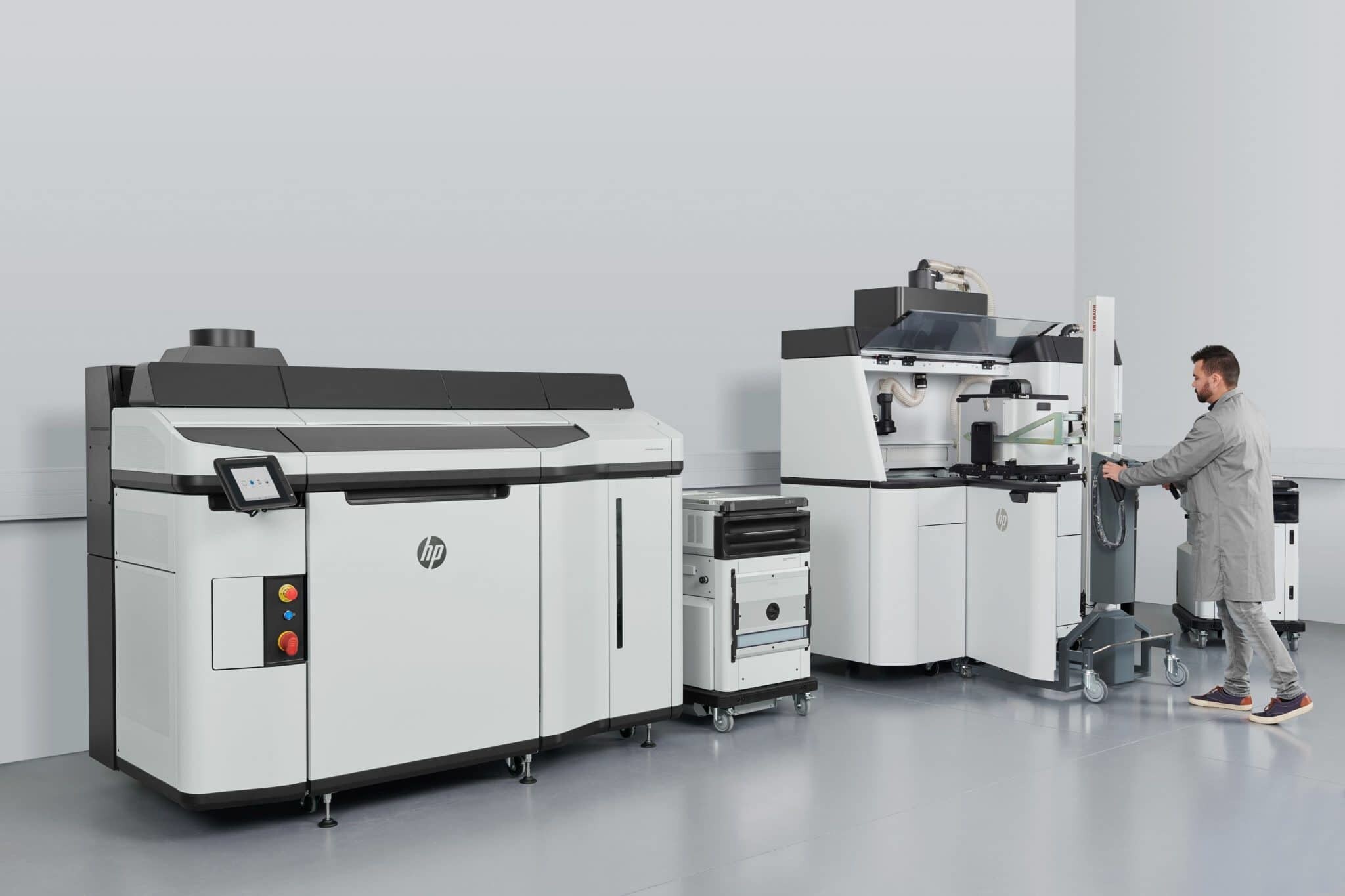
- Model example: Jet Fusion 4200
- Build volume: 380 × 284 × 380 mm (sufficient for full‑leg sockets)
- Layer thickness: 0.08–0.12 mm, enabling fine surface detail
- Print speed: Up to 25 cm³/hr, translating to a typical prosthetic socket (≈150 cm³) in ~6 hrs
- Materials: PA12, PA12‑CF, TPU, and emerging biocompatible blends (ISO‑10993 certified)
DyeMansion Post‑Processing – What Sets It Apart
- LUX Laser Cleaning: Removes residual powder >99 % without abrasive media; reduces manual labor and contamination risk.
- LIX Laser Coloring: Applies permanent, UV‑stable pigments in <2 min per part, eliminating hand‑painting inconsistencies.
- Integrated Software: Syncs with HP’s Build Manager to automatically trigger cleaning/color cycles once a print completes, ensuring a closed‑loop production line.
Benefits for Healthcare Providers
- Reduced Patient Burden: Fewer appointments lower travel costs and improve compliance.
- Scalable Production: One‑click replication of a verified design supports batch orders for clinics serving multiple patients.
- Regulatory Alignment: Digital files provide immutable evidence for FDA 510(k) submissions and ISO‑13485 quality systems.
- Cost Efficiency: Material waste drops by ~30 % versus subtractive machining; labor hours cut by 50‑70 %.


