Key Takeaways
- Global additive manufacturing (AM) revenue hit $24.2 bn in 2025, a 10.9 % YoY increase.
- Growth rates vary sharply by region: Asia‑Pacific ≈ 20 %, North America ≈ 12 %, Europe ≈ 6 %.
- Arno Held warns that the industry remains over‑capitalised and that many firms are still chasing market share rather than solving real‑world problems.
- The “need‑driven” AM applications (thermal management, AI‑hardware, data‑center components) are outpacing legacy use‑cases such as prototyping.
Introduction
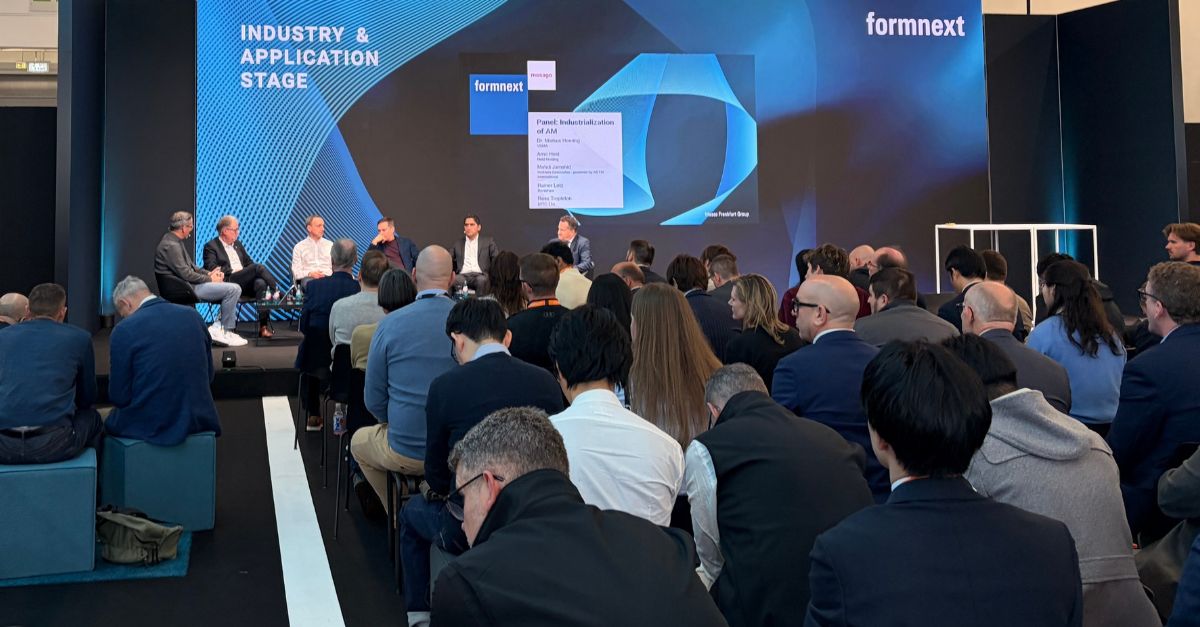
Additive manufacturing has crossed the $24 bn threshold, yet the sector’s financial health is under scrutiny. At Formnext 2026, a panel led by moderator Sven Krause brought together five senior voices—Arno Held, Mahdi Jamshid, Markus Heering, Rainer Lotz, and Ross Trepleton—to dissect why adoption lags behind the technology’s promise and why Europe appears to be falling behind China and the United States.
Market Snapshot: Numbers Behind the Hype
Global Revenue and YoY Growth
Mahdi Jamshid, Director of Market Intelligence at Wohlers Associates, cited the Wohlers Report 2026:
| Year | Global AM Revenue | YoY Growth |
|---|---|---|
| 2024 | $21.8 bn | — |
| 2025 | $24.2 bn | 10.9 % |
Regional Growth Divergence
| Region | 2025 Growth | Primary Drivers |
|---|---|---|
| Asia‑Pacific (led by China) | ≈ 20 % | Metal‑AM demand, polymer‑AM export boom |
| North America | ≈ 12 % | Defense contracts, aerospace metal‑AM |
| Europe | ≈ 6 % | Incremental adoption in automotive & med‑tech |
The data reveal a widening performance gap: while Asia‑Pacific is expanding at nearly triple the European rate, North America maintains a solid mid‑range trajectory.
Shift From “Technology‑First” to “Need‑First”
Jamshid emphasized a strategic pivot in AM adoption. Early generations of 3‑D printing often introduced a capability before a clear market problem existed. Today, real‑world manufacturing needs are dictating where AM is deployed. Hot‑spot applications include:
| Application | Typical Material | Value‑Add |
|---|---|---|
| Thermal‑management components (heat exchangers, conformal cooling) | Aluminum alloys, copper‑based powders | Up to 30 % weight reduction, 2‑3× faster cycle times |
| AI‑hardware enclosures | High‑performance polymers (PEEK, PPS) | Integrated cooling channels, reduced part count |
| Data‑center heat sinks | Stainless steel, titanium | Custom geometry for high‑density airflow, 15‑20 % efficiency gain |
These sectors illustrate how AM is moving from prototyping to volume‑critical, performance‑driven production.
Arno Held’s Cautionary View
Arno Held, now heading Held Holding after a stint as Managing Partner at AM Ventures, offered a sobering counterpoint. While his enthusiasm for the technology remains high, he warned that the industry is still recovering from a speculative investment wave that inflated expectations. Key concerns include:
| Issue | Impact |
|---|---|
| Capital over‑saturation | Many start‑ups lack sustainable cash flow; M&A activity is rising as larger players absorb weaker firms. |
| Fragmented market share | Over 2,300 AM equipment suppliers worldwide compete for the same customers, driving price pressure. |
| Talent gap | Skilled operators and engineers for metal‑AM remain scarce, slowing scale‑up. |
Held argues that the path forward requires consolidation, focused R&D on cost‑effective metal feedstocks, and business models that align with end‑user ROI, rather than chasing headline‑grabbing capacity figures.
Comparative Outlook: Europe vs. Asia‑Pacific
| Metric | Europe (2025) | Asia‑Pacific (2025) |
|---|---|---|
| Revenue Growth | 6 % | 20 % |
| Metal‑AM Share of Total AM | ~35 % | ~45 % |
| Average Machine Utilisation | 55 % | 68 % |
| Public R&D Funding (USD bn) | 0.9 | 2.3 |
The table underscores that Europe lags not only in growth but also in machine utilisation and public R&D investment, factors that directly affect competitiveness.
Bottom Line
Additive manufacturing has cemented itself as a $24 bn industry, yet its trajectory is uneven. While Asia‑Pacific rockets ahead with a ≈ 20 % growth rate, Europe’s modest ≈ 6 % increase signals a need for strategic realignment. Arno Held’s warning about over‑investment and fragmented market share serves as a reminder that sustainable growth will depend on consolidating capabilities, targeting genuine manufacturing challenges, and aligning financial incentives with measurable performance gains. Companies that pivot from “technology‑first” to “need‑first” will be best positioned to capture the next wave of AM value.


