Key Takeaways
- Sakuu Corp. will go public through a SPAC merger with Pyrophyte Acquisition Corp. II, valuing the company at ≈ $600 million pre‑money.
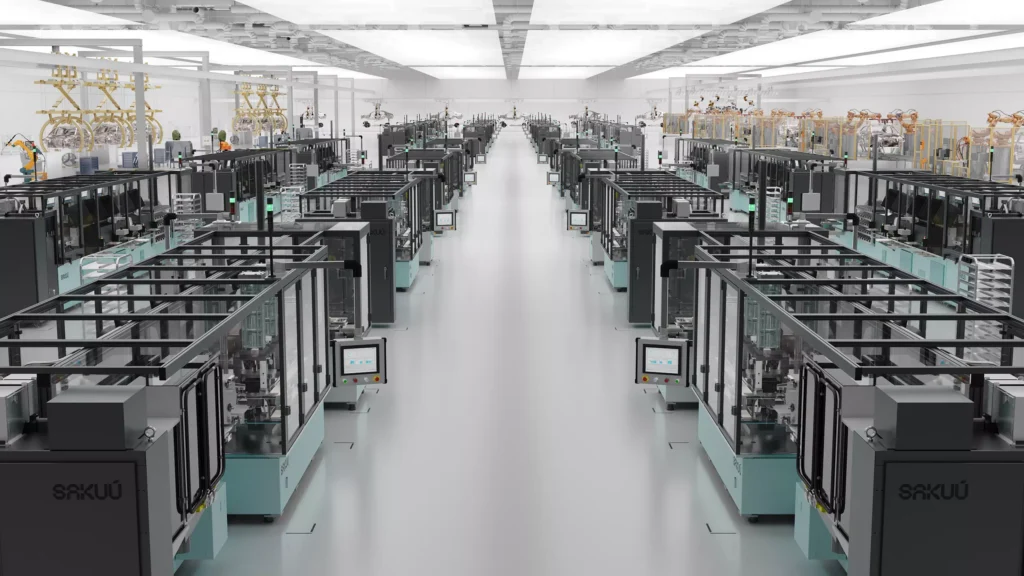
- The capital raise is earmarked for scaling the Kavian dry‑cathode 3‑D‑printed‑battery platform, with a market rollout planned for Q2 2025.
- Dry‑cathode (fully‑dry) production can cut battery‑cell carbon emissions by 30‑45 % and reduce capex by ~20 % versus traditional slurry‑based processes.
- The SPAC route offers a faster timeline (≈ 6 months) and lower underwriting fees (≈ 2 % of proceeds) compared with a conventional IPO (≈ 12 months, ≈ 8 % fees).
- Sakuu’s AI‑driven battery‑design software targets high‑density energy storage for data‑center racks, a market projected to exceed $30 billion by 2030.
Background: Why the SPAC Path Is Gaining Traction
The IPO Market’s Cooling Trend
- Since 2022, the number of U.S. IPOs has fallen ≈ 35 % (Financial Poise, 2024).
- Regulatory scrutiny and higher disclosure costs have pushed mid‑size innovators toward alternative routes.
SPACs Offer a “Fast‑Track” Alternative
| Feature | Traditional IPO | SPAC Merger |
|---|---|---|
| Typical timeline | 9‑12 months (filing to pricing) | 4‑6 months (shareholder vote to close) |
| Underwriting fees | 7‑9 % of gross proceeds | 1.5‑2.5 % (sponsor promote + PIPE fees) |
| Pricing certainty | Market‑driven, can be volatile | Negotiated valuation with sponsor |
| Regulatory burden | Full S‑1 review, roadshow disclosures | 8‑K filing; less extensive prospectus |
| Typical size (2023) | $500 M–$5 B | $100 M–$1 B for tech‑energy deals |
Sources: Reuters (2024), Bloomberg (2024), SEC filings.
Sakuu’s Business Model and Technology
The Kavian Dry‑Cathode Platform
- Process: Fully‑dry extrusion of cathode material onto a metal foil, eliminating the slurry‑mix, drying oven, and solvent recovery steps.
- Materials Compatibility: Supports lithium‑nickel‑manganese‑cobalt oxide (NMC), lithium‑iron‑phosphate (LFP), and emerging composite cathodes.
- Performance Claims: Prototype cells show energy density of 240 Wh kg⁻¹ and cycle life > 1500 cycles (Green Car Reports, 2024).
Environmental and Cost Advantages
| Metric | Conventional Slurry Cell | Dry‑Cathode (Kavian) |
|---|---|---|
| CO₂e per kWh | 150 kg CO₂e | 80‑105 kg CO₂e (‑30‑45 %) |
| Capital Expenditure | $120 – $150 k per GWh line | $95 – $115 k per GWh line |
| Water Usage | 200 L kWh⁻¹ | < 20 L kWh⁻¹ |
| Solvent Recovery | Required (costly) | Not required |
AI‑Enabled Battery Design for Data Centers
- Sakuu integrates a machine‑learning engine that predicts optimal electrode geometry for high‑power, high‑density racks.
- The global data‑center battery market is projected to grow CAGR ≈ 12 %, reaching $30 B by 2030 (IDC, 2024).
Financing the Roll‑out
- Deal Structure: Merger with Pyrophyte Acquisition Corp. II includes a $100 M PIPE (private investment in public equity) and a $50 M earn‑out tied to Q2 2025 production milestones.
- Use of Proceeds:
- Manufacturing scale‑up: Build two additional 1 GWh‑per‑year dry‑cathode lines in the U.S. Midwest.
- R&D: Expand AI‑battery‑design software and certify composite cathodes.
- Working capital & regulatory compliance.
The pre‑money valuation of $600 M reflects a 12× forward EV/EBITDA multiple based on projected 2026 revenues of $150 M (assuming 1 GWh annual sales at $150/kWh).
Market Implications
- Competitive Landscape: Companies such as Sila Nanotechnologies and Solid Power are pursuing solid‑state or slurry‑based innovations, but few have a fully‑dry production line.
- Supply‑Chain Resilience: By removing solvents and drying ovens, Sakuu reduces reliance on industrial‑grade ethanol and large‑capacity HVAC, mitigating pandemic‑era bottlenecks.
Bottom Line
Sakuu’s decision to go public via a SPAC merger aligns with the broader shift among mid‑size, capital‑intensive innovators seeking faster, cheaper access to public markets. The $600 million valuation funds a promising dry‑cathode platform that could slash battery‑cell carbon footprints by up to 45 % while lowering capex. If the Q2 2025 rollout succeeds, Sakuu is positioned to capture a fast‑growing niche—AI‑optimized batteries for data‑center energy storage—potentially delivering strong top‑line growth and a differentiated, environmentally friendly value proposition in the fiercely competitive battery ecosystem.


