Key Takeaways
- Ukrainian volunteer networks have printed hundreds of thousands of combat‑support parts using consumer‑grade FDM printers such as the Prusa Core One L.
- Desktop 3D printing can produce a PLA nose‑cone in under 30 minutes, a task that would require 2–3 days on a conventional CNC lathe.
- U.S. export‑control rules (EAR, ITAR) are tightening on “dual‑use” additive‑manufacturing equipment, but outright bans risk crippling civilian innovation.
- Compared with a typical 3‑axis CNC mill, a low‑cost FDM printer offers ≈80 % lower capital cost, ≈90 % faster part‑lead time, but ≈70 % lower dimensional accuracy (±0.2 mm vs ±0.05 mm).
From Ukraine’s War Effort to U.S. Restrictions: The Desktop 3D‑Printing Debate
The Ukrainian “Filament Frontline”
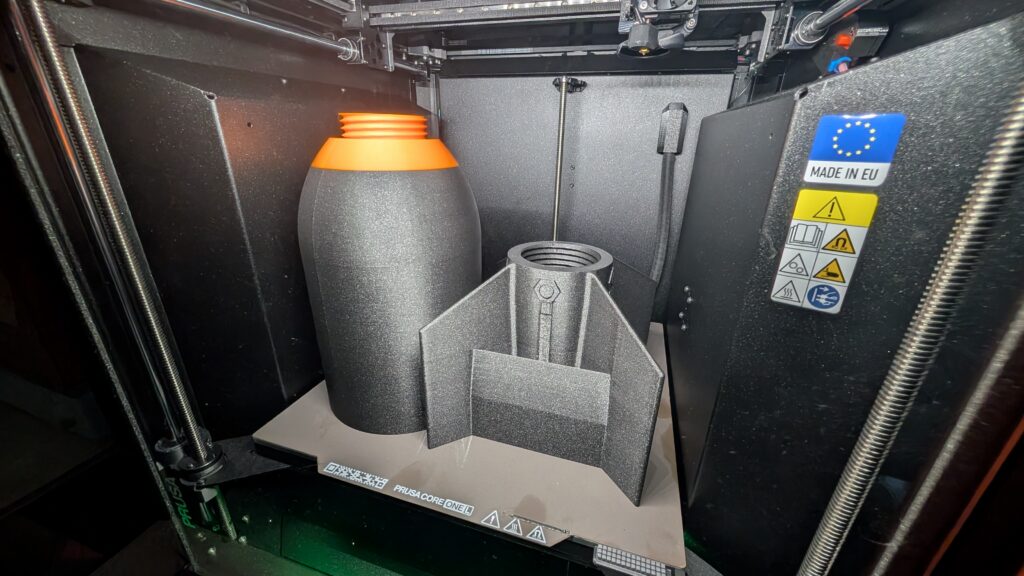
When I lifted a freshly printed drone‑interceptor nose‑cone off the build plate of my Prusa Core One L, the part’s aerodynamic shape and surface finish surprised me. The same geometry would have taken my father—a master machinist—48–72 hours on a CNC lathe and milling center. The workflow was simple: a CAD model, a spool of PLA filament, and a desktop FDM printer that builds the part layer‑by‑layer.
In Ukraine, that simplicity has become a strategic asset. Since the invasion, volunteer collectives have deployed over 1,200 consumer‑grade printers (mostly Prusa, Creality, and Anycubic models) across 20+ countries to fabricate frontline supplies—periscopes, drone recovery brackets, PLA‑wing modules, and thruster mounts. According to a June 2024 Forbes interview with Eman, founder of WildBees Poland, the network has produced ≈250,000 parts to date, each printed in 15–45 minutes depending on size. The effort exemplifies “Democratized Manufacturing,” where distributed, low‑cost tools enable rapid, on‑demand production far beyond traditional defense factories.
“We are dispersed, but we can act completely independently of each other, like bees,” Eman told Forbes.
Desktop FDM vs. Traditional CNC Milling
| Feature | Desktop FDM Printer (e.g., Prusa Core One L) | 3‑Axis CNC Mill (e.g., Haas Mini Mill) |
|---|---|---|
| Initial Cost | $1,200 USD (incl. filament starter kit) | $15,000 USD (machine only) |
| Part Lead Time | 15–45 min per small part | 2–3 days for comparable geometry |
| Material Options | PLA, PETG, TPU, carbon‑filled filaments | Aluminum, steel, brass, plastics |
| Dimensional Accuracy | ±0.20 mm (layer height 0.1 mm) | ±0.05 mm (tool radius 0.5 mm) |
| Surface Finish | 100–150 µm Ra (post‑process required) | 12–20 µm Ra (as‑built) |
| Portability | 30 × 30 × 45 cm, 8 kg | 150 × 120 × 180 cm, 300 kg |
| Energy Consumption | 120 W (idle) – 250 W (printing) | 1.2 kW (idle) – 3 kW (cutting) |
Numbers reflect typical configurations in 2024 and are sourced from manufacturer specifications and field reports.
The table shows why volunteers favor FDM printers for rapid, low‑volume parts: the capital outlay is ≈92 % lower, and the time from design to deployment can be compressed to under an hour. However, CNC milling still dominates when tight tolerances, metallic strength, or smooth surfaces are mission‑critical.
U.S. Export Controls and the “Dual‑Use” Dilemma
In early 2024 the U.S. Department of Commerce updated the Export Administration Regulations (EAR) to place high‑resolution desktop printers (≥0.1 mm layer height, dual‑extrusion, or metal‑filament capability) on the Commerce Control List (CCL) 0A997. The move aims to prevent adversaries from producing precision‑engineered weapon components.
| Regulation | Scope | Potential Impact on Civilian Use |
|---|---|---|
| EAR 0A997 | Printers capable of <0.1 mm layers, metal‑filled filaments | Requires export license for >$5,000 shipments to “restricted” end‑users |
| ITAR | Any equipment used for classified defense projects | May classify certain drone‑recovery brackets as “defense articles” |
| Proposed “Additive‑Manufacturing Safeguard Act” (2025) | Mandatory firmware watermarking for all FDM printers sold in the U.S. | Could limit open‑source firmware modifications |
Critics argue that over‑broad restrictions could choke the very innovation that fuels small‑business prototyping, medical device production, and educational STEM programs. Proponents counter that unregulated access enables hostile actors to fabricate critical components—for example, PLA‑based drone‑propeller guards that have already been documented in the Ukrainian theater.
Balancing Security and Innovation
Policymakers face a classic trade‑off: risk mitigation vs. technological diffusion. A nuanced approach could involve:
- Tiered licensing—allowing low‑resolution printers (≥0.2 mm layer) to be exported freely while high‑precision models require end‑user verification.
- Secure firmware—implementing cryptographic signing without disabling community‑driven open‑source development.
- International cooperation—sharing best‑practice guidelines with allies to monitor illicit additive‑manufacturing activity.
Such measures would preserve the democratized manufacturing model that proved vital in Ukraine, while curbing the emergence of untraceable weapon parts.
Bottom Line
Desktop FDM printers have transformed Ukraine’s wartime logistics, delivering hundreds of thousands of functional parts in hours rather than days. Their


