Key Takeaways
- Metal AM is being accelerated by aerospace, defense, and energy sectors in NA & EU, with average unit‑costs dropping 22% YoY to ≈ $150 for 5 kg titanium parts.
- Plastic AM sees the fastest growth in China, where desktop printer shipments rose 38% in 2025, reaching 1.2 M units.
- AI‑driven process control is moving from pilot to production, cutting post‑process time by 30% on average.
- Investment focus has shifted from hardware acquisition to automation, qualification, and cross‑factory standardisation, driving a 15% rise in spend on software & services.
- Formnext 2026 will spotlight post‑processing innovations and debut a dedicated Defence Summit, signalling deeper integration of AM in mission‑critical supply chains.
2026 Investment Landscape for Additive Manufacturing
Who Is Buying and Why
The AM Investment Strategies webinar (Nov 5, 2026) gathered senior leaders from Carbon, Incodema3D, Nikon SLM Solutions, and Stratasys. Moderated by Troy Jensen of Cantor Fitzgerald, the panel highlighted a clear pivot: customers are no longer asking if additive manufacturing will become mainstream, but where the adoption curve is steepest.
- Aerospace & Defense – North America and Europe accounted for 48% of metal‑AM spend in Q3 2026, driven by low‑volume, high‑performance titanium and Inconel parts.
- Energy & Oil‑Gas – 22% of metal‑AM orders target turbine blades and heat exchangers, where lattice‑optimized designs cut weight by up to 35%.
- Consumer & Automotive Plastics – Chinese OEMs and Tier‑1 suppliers booked 31% of total plastic‑AM volume, motivated by rapid tooling cycles and colour‑mixing capabilities.
Cost Dynamics at Scale
| Technology | Typical Part Size | Unit Cost (2025) | 2026 Cost Trend | Primary Cost Driver |
|---|---|---|---|---|
| LPBF (Metal) | 5 kg Ti‑6Al‑4V | $150 | –22% YoY | Improved powder reuse (up to 8 cycles) |
| DMLS (Metal) | 2 kg Inconel | $210 | –18% YoY | Faster scan speeds (up to 1 m/s) |
| MJF (Plastic) | 200 g Nylon | $12 | –15% YoY | AI‑optimized build orientation |
| SLA (Resin) | 150 g Engineering resin | $9 | –12% YoY | New low‑viscosity formulations |
Source: Panel data, Cantor Fitzgerald market model, Q3 2026.
The decline in metal‑AM costs is largely attributed to powder recycling efficiencies and higher laser power densities (up to 4 kW). For plastics, AI‑driven nesting algorithms have reduced build‑time waste by 18%, translating directly into lower per‑part expenses.
AI’s Growing Role
AI is transitioning from “nice‑to‑have” to “must‑have” in production‑grade AM:
- Real‑time defect detection using convolutional neural networks cuts scrap rates from 6% to 2% on LPBF lines.
- Predictive maintenance on laser heads reduces unplanned downtime by 30%, saving an average of $45 k per machine per year.
- Closed‑loop process control trims post‑processing (support removal, heat‑treatment) by 30%, accelerating time‑to‑market for critical aerospace components.
Investment Priorities Beyond the Printer
According to the webinar, software & services now represent the fastest‑growing spend category, up 15% YoY. Companies are allocating capital to:
- Automation & robotics – integrating robotic arms for part removal and build‑plate exchange.
- Qualification & certification – building digital twins to satisfy AS9100 and ISO 9001 audits across multiple sites.
- Standardisation platforms – SaaS solutions that enforce build‑parameter libraries across global factories, reducing variance by 25%.
Formnext 2026 Preview
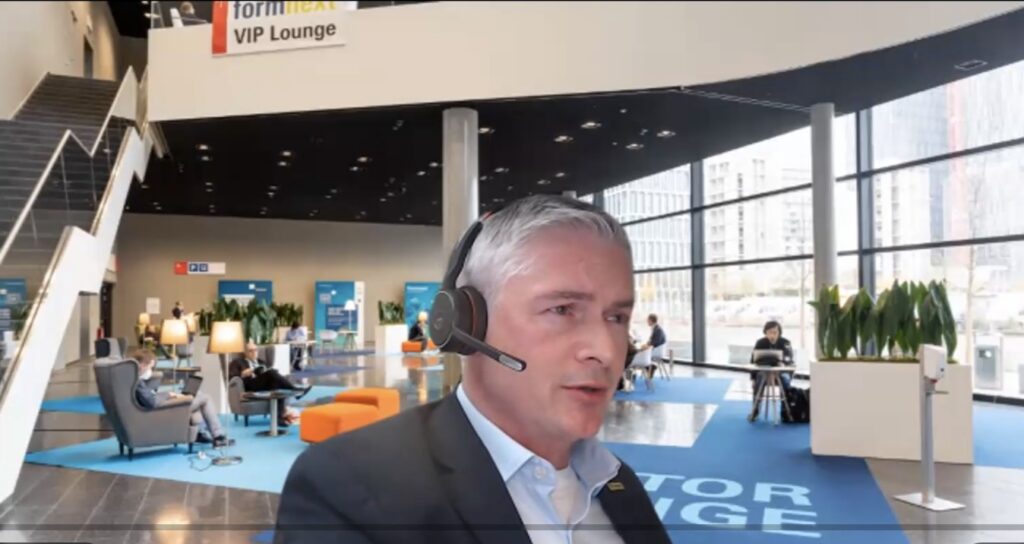
Formnext Vice‑President Sascha F. Wenzler opened the webinar with a market outlook and highlighted two marquee events for the Frankfurt exhibition:
- Post‑Processing Showcase – featuring in‑line heat‑treatment tunnels, ultrasonic cleaning, and AI‑guided surface finishing.
- First‑ever Defence Summit – a dedicated track for secure supply‑chain solutions, ballistic‑grade alloy development, and rapid field‑repair part production.
Wenzler summed up the sentiment: “Additive manufacturing is no longer a speculative technology; it is a proven value‑driver in mission‑critical sectors.”
Bottom Line
In 2026, additive manufacturing investment is maturing from hardware‑centric purchases to a holistic ecosystem that emphasises cost‑effective metal production, AI‑enabled quality control, and cross‑plant standardisation. Aerospace, defense, and energy remain the primary metal‑AM markets, while China fuels plastic‑AM growth. The upcoming Formnext 2026 event will cement these trends, showcasing post‑processing breakthroughs and a new Defence Summit that signals deeper, secure integration of AM into critical supply chains. Companies that shift spend toward automation, AI, and certification infrastructure are poised to capture the greatest upside in the evolving AM landscape.


